Page not found
That page doesn’t exist (or it was moved). Use this link to get back to the main site.
HOW WE DETAIL
EXPLAINED
2 Min Video
We walk you through our Car Detailing Process from start to finish on a one of a kind corvette, the transformation is night and day.

Ceramic Coating: The Ultimate Vehicle Upgrade
Auto Care, Ceramic Coating, Vehicle Protection
Why Ceramic Coating Your Vehicle Is One of the Smartest Upgrades You Can Make
If you’ve ever stepped back from a freshly detailed car and wished it could look like that all the time, ceramic coating was made for you. It’s not magic, but it can feel pretty close. Let’s walk through what ceramic coating actually does, why it’s different from wax, and how it can save you time, money, and frustration over the life of your vehicle.
What Is Ceramic Coating, Really?
Ceramic coating is a liquid polymer that’s applied to your vehicle’s paint and then cures into a hard, transparent layer. Think of it as a semi-permanent shield that bonds to your clear coat instead of just sitting on top of it like wax. Once cured, it becomes a durable, glossy barrier between your paint and the outside world.
Unlike traditional waxes that might last a few weeks or months, a professionally applied ceramic coating can protect your car for years with proper care. That’s where the real value—and the real difference—comes in.
UV Protection: Sun Damage You Don’t See Until It’s Too Late
The sun is one of your car’s biggest enemies. Constant UV exposure slowly oxidizes your clear coat, causing paint to fade, dull, and eventually peel. This is why older cars often look chalky or washed out, especially on the roof, hood, and trunk where the sun hits hardest.
A quality ceramic coating adds a UV-resistant layer over your paint. It acts like sunscreen for your car, helping to prevent that slow, irreversible damage. Over time, this means your color stays richer and your clear coat stays healthier, which translates into a newer-looking car and better resale value down the road.
Hydrophobic Properties: Water Just Slides Right Off
One of the first things people notice after a ceramic coating is how water behaves. Instead of clinging to the surface, it beads up and sheets off. This “hydrophobic” effect is more than just fun to watch—it’s a big part of why coated cars stay cleaner longer.
Because water can’t easily stick, it takes less dirt and road film with it. After a rain, a coated car often looks freshly rinsed, while an unprotected car shows streaks, spots, and grime. When it’s time to wash, that same slick surface means less scrubbing, less soap, and less time in the driveway.
Chemical Resistance: Everyday Contaminants Are Harsher Than You Think
Your vehicle’s paint deals with a lot more than just dust. Road salt, industrial fallout, bug splatter, tree sap, bird droppings, and even harsh cleaners can all attack your clear coat. Many of these contaminants are acidic or alkaline enough to etch into unprotected paint if they sit too long.
Ceramic coatings are designed to be chemically resistant. That doesn’t mean you can ignore a bird dropping for a month, but it does buy you valuable time. Instead of immediately burning into your clear coat, these contaminants have to get through the coating first. In real life, that often means the difference between a quick wipe-off and a permanent stain or expensive paint correction later.
Easier Maintenance: Less Elbow Grease, Better Results
If washing your car feels like a full workout, ceramic coating can seriously change that. Because the surface is so slick and resistant to bonding, dirt and grime don’t cling as stubbornly. Most of the time, a gentle wash with a pH-neutral shampoo and a soft mitt is all you need to bring back that just-detailed look.
You’ll also find that you need to wash less often. A coated car simply doesn’t look dirty as quickly as an unprotected one. Over a year, that adds up to fewer trips to the car wash, less water used at home, and less time spent chasing streaks and spots. Maintenance becomes about preserving the coating, not constantly trying to revive tired paint.
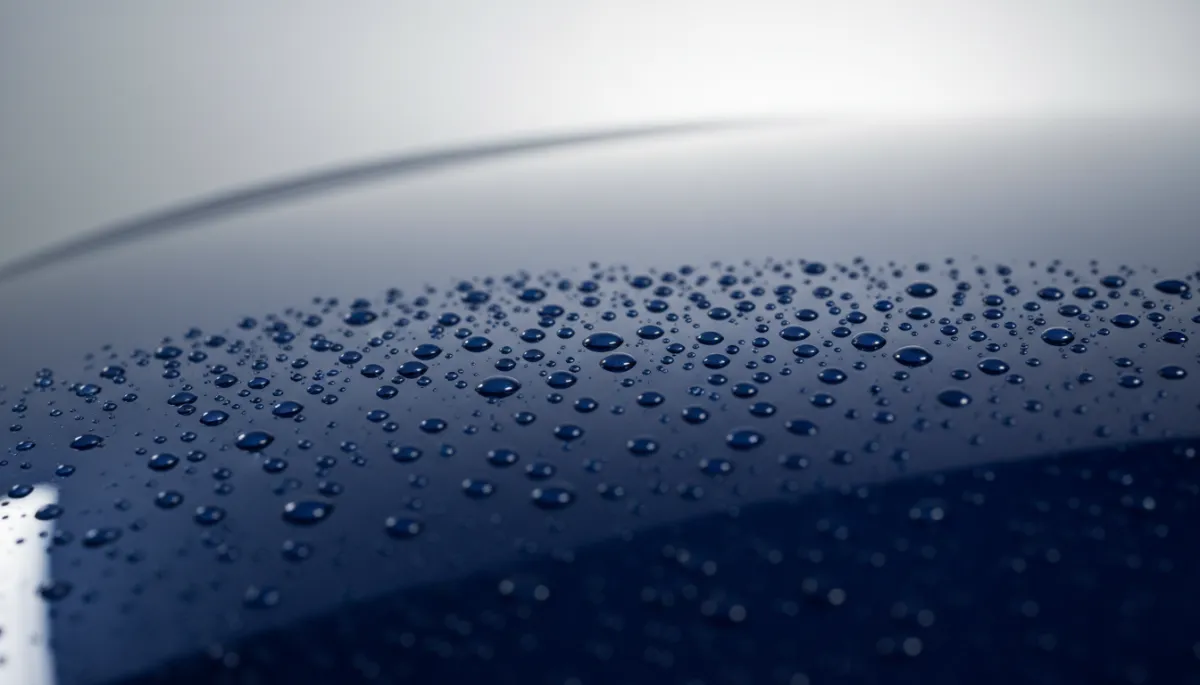
Hydrophobic ceramic layers make washes faster, gentler, and far more effective.
Enhanced Gloss: That “Showroom” Look, Every Day
Let’s be honest: part of the appeal is how good a ceramic-coated car looks. By filling in microscopic pores in the clear coat, the coating creates an incredibly smooth, reflective surface. Light bounces off more evenly, which gives that deep, wet gloss people associate with show cars and high-end details.
On darker colors, this effect can be dramatic—blacks look deeper, metallics pop, and even neutral tones gain a richer, more refined shine. And unlike a fresh wax, that gloss doesn’t disappear after a few rainstorms. With proper care, it can be your car’s “new normal.”
What Happens to Unprotected Paint in Harsh Conditions?
To really appreciate the benefits, it helps to understand what your paint is up against when it’s not protected:
Sun exposure: UV rays slowly oxidize your clear coat, causing fading, dullness, and eventually peeling. Once that clear coat fails, you’re looking at repainting, not just polishing.
Road salt: In winter climates, salt accelerates corrosion on exposed metal and can stain and damage unprotected paint. It also sticks around, attracting moisture and grime.
Bird droppings and bugs: These can be highly acidic. Left on bare paint, they can etch the surface in hours, leaving ghostly outlines even after you wash them away.
Hard water: Minerals in hard water leave behind spots that can bake into the clear coat under the sun, creating stubborn water marks that often need machine polishing to remove.
Without a protective barrier, your paint takes the full hit from all of this. Over a few years, even a well-loved car can start to look older than it is. Ceramic coating doesn’t make your car invincible, but it gives you a strong, sacrificial layer that takes the abuse so your paint doesn’t have to.
Real-World Cost Savings vs. Regular Waxing and Detailing
On paper, ceramic coating can look expensive compared to a simple wax or a basic detail. But zoom out and look at the numbers over a few years, and the picture changes quickly.
Many people wax their cars three or four times a year to keep them protected. If each professional wax or sealant service costs you, say, $100–$150, you’re easily spending $300–$600 annually. Over three years, that’s $900–$1,800, and you’re still dealing with the ups and downs of short-lived protection.
A professional ceramic coating might run $800–$1,500 depending on the vehicle size, condition, and product used. But that coating can last several years with straightforward maintenance. During that time, you typically won’t need major correction again, and you can skip frequent waxing altogether. You’re also far less likely to need expensive paint correction or repainting due to neglect or etching, which can easily cost thousands.
Add in your own time saved on washing and re-waxing, plus the boost in resale value when you go to sell or trade the car, and ceramic coating often comes out ahead—not just as a luxury, but as a smart long-term investment in the vehicle you rely on every day.
Professional Application vs. DIY Kits: Why the Process Matters
If you’ve browsed online, you’ve probably seen DIY ceramic kits promising professional results at home. While some consumer-grade products can improve gloss and protection, there are important differences between a weekend application in the driveway and a professional-grade coating applied by an experienced detailer.
Surface Prep and Paint Correction
Ceramic coatings lock in whatever is underneath them—good or bad. That means if your paint has swirl marks, light scratches, water spots, or haze, they’ll still be there after the coating. Professionals spend hours on surface prep: deep cleaning, decontaminating with iron removers and clay bars, then machine polishing to correct defects and refine the finish before any coating touches the paint.
Most DIY jobs skip or rush these steps, either because the tools aren’t available or the time and experience just aren’t there. The result can be a coated car that’s protected, but still looks dull or scratched—wasting a lot of the potential of the product you just applied.
Controlled Environment and Application Technique
Ceramic coatings are sensitive to temperature, humidity, and dust during application and curing. Professional installers work in controlled environments—clean, well-lit studios or bays where they can keep contaminants off the surface while the coating flashes and cures. They also know how much product to use, how long to let it sit, and how to level it properly to avoid streaks and high spots.
At home, you’re fighting dust, pollen, wind, and changing temperatures. It’s easy to miss a section, leave uneven areas, or accidentally let the coating cure too long before wiping, which can leave stubborn streaks that require polishing to fix. That’s not exactly the stress-free upgrade most people are looking for.
Product Quality and Warranty Support
Many professional-only coatings aren’t available to the general public. They’re sold through certified installers and often come with written warranties—sometimes backed by the manufacturer—that cover performance for several years when you follow the recommended maintenance schedule. If something goes wrong, you have a shop and a brand to turn to for support.
DIY kits rarely offer that level of backing. You might save money up front, but you’re also taking on all the risk yourself: surface prep, application, and any corrections if it doesn’t go as planned. For a lot of owners, especially with newer or higher-value vehicles, the peace of mind that comes with professional installation and warranty coverage is worth the extra investment.
Is Ceramic Coating Right for You?
If you care about how your vehicle looks, plan to keep it for a while, and want to spend less time fighting dirt, water spots, and fading paint, ceramic coating is worth serious consideration. It’s not a force field—you’ll still need to wash and care for your car—but it shifts the balance in your favor in a big way.
You’ll enjoy richer gloss, stronger protection against UV and chemicals, easier maintenance, and real long-term savings compared to constant waxing and repeated correction. Partner with a reputable professional, ask about their prep process and products, and you’ll give your vehicle a level of protection that truly matches how much you rely on it every day.

F.A.Q.
How can I book an appointment?
Book an appointment anytime by phone or online. For the fastest response time you can call or text +1 616-366-9815 Monday to Friday anytime from 8AM to 8PM. You can also easily book online by clicking SCHEDULE ONLINE at the top of the page.
Can you detail my car at my home, office or appartment?
Yes we can! All we need is acess to electricity and water. We carry extention cords for water and electricity as long as 100 feet so its easy for us to access power.
How long does car detailing usually take?
Each detail takes a different amount of time depending on the size and dirtyness of the vehicle. On average it takes 1.5-3.5 hours for an Exterior Detail job. It takes 1.5-3.5 hours for an Interior Detail job, and it takes 2-5 hours for a Full Detail job.
How long will the clean last?
We at Lifestyle Detailing pride ourselves in how long we are able to keep your car clean even after we are done detailing. We generously apply various paint, window, and plastic sealants and protectants all over your car to keep it shinning and protected for longer. We like to give our customers a lot of value for their money and making the detail job last a long time is our priority.
What if I don't have access to water or electricity?
No water or power? No problem. We’re fully self-contained—our team brings both water and electricity—so we can detail your vehicle anywhere (home, work, apartment, curbside). No hookups needed.
Your car deserves more than just a wash
It deserves the expert touch of Lifestyle. We’re proud to offer professional mobile car detailing services, designed to give your vehicle the ultimate care it needs. Whether you’re looking for a deep interior clean, a sparkling exterior, or long-lasting protection, Lifestyle has you covered. Best of all, we bring our services directly to you, saving you time and hassle.

